

Industrial Time-Series Large-Model-Driven Online Quality Monitoring for Die Casting
A large-model-driven adversarial semi-supervised training scheme that combines a handful of destructive-test samples with massive production-line sensor data to predict the mechanical properties of large die-cast parts, region by region, online

Project Overview
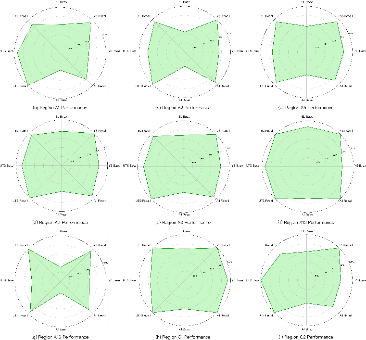
The mechanical properties of large die-cast parts rely on destructive testing (every tested part is destroyed), leaving extremely few labeled samples; properties vary substantially across regions of the same part, and black-box models are unfit for safety-critical decisions. This project proposes a large-model-driven adversarial semi-supervised training framework for online sensing of die-casting quality.
Research Objectives
Predicting mechanical properties under scarce labels (lowering the cost of destructive testing)
Characterizing property variation across regions of the same part
Delivering predictions with accompanying root-cause reasoning and process-optimization recommendations
Methodology
Reinforcement learning (GRPO) enables the large model to learn the mapping from sensor data to mechanical properties from a handful of tested samples; a trained judge model discriminates real from predicted outcomes, and the two co-evolve adversarially; massive production-line sensor data feeds the semi-supervised training.
Technical Approach: How It Works
- 1
Aligning Two Data Sources
On one side, massive production-line sensor time series (injection curves, temperature fields, vacuum levels, etc.); on the other, region-level mechanical-property labels from a handful of destructive tests — a sample-level alignment between the two is established first.
- 2
Reinforcement-Learning Cold Start (GRPO)
GRPO lets the industrial time-series large model learn an initial "sensor data → regional mechanical properties" mapping from a small set of labeled samples, outputting a reasoning trace rather than a black-box number.
- 3
Adversarial Semi-Supervised Co-Evolution
A trained judge model learns to distinguish "real inspection results" from "large-model predictions"; the large model learns to fool the judge while the judge learns to spot the tells, and the two co-evolve adversarially, extracting value from the massive pool of unlabeled sensor data.
- 4
Prediction + Root-Cause Reasoning + Process Recommendations
Each regional performance prediction ships with a reasoning chain traceable to specific process parameters, directly supporting die-casting process-optimization decisions.
Figures: Methods & Results
Key Results
Overall mechanical-property prediction accuracy of 91% across regions
Significantly lowers missed-detection and recall risk, cutting destructive-testing cost
Predictions ship with a reasoning trace, supporting process-optimization recommendations
Related Publications
A Large Language Model-Based Time-Series Framework for Industrial Multi-Task Process Monitoring: A Case Study in Stamping Manufacturing, SSRN, 2025
Intelligent Monitoring of Manufacturing Processes