
· Academic Exchange · 12 min read
e-works Interview | Dr. Jianshe Feng on the Real-World Deployment and Challenges of Predictive Maintenance Technology
e-works Digital Enterprise Network sat down with Prof. Jianshe Feng for an in-depth interview on why predictive maintenance is so difficult to scale beyond the pilot stage. He proposes a systematic industrial intelligence methodology to escape the 'pilot trap', covering data collection strategy, model development workflow, and the critical factors for integrating PdM into enterprise business systems.
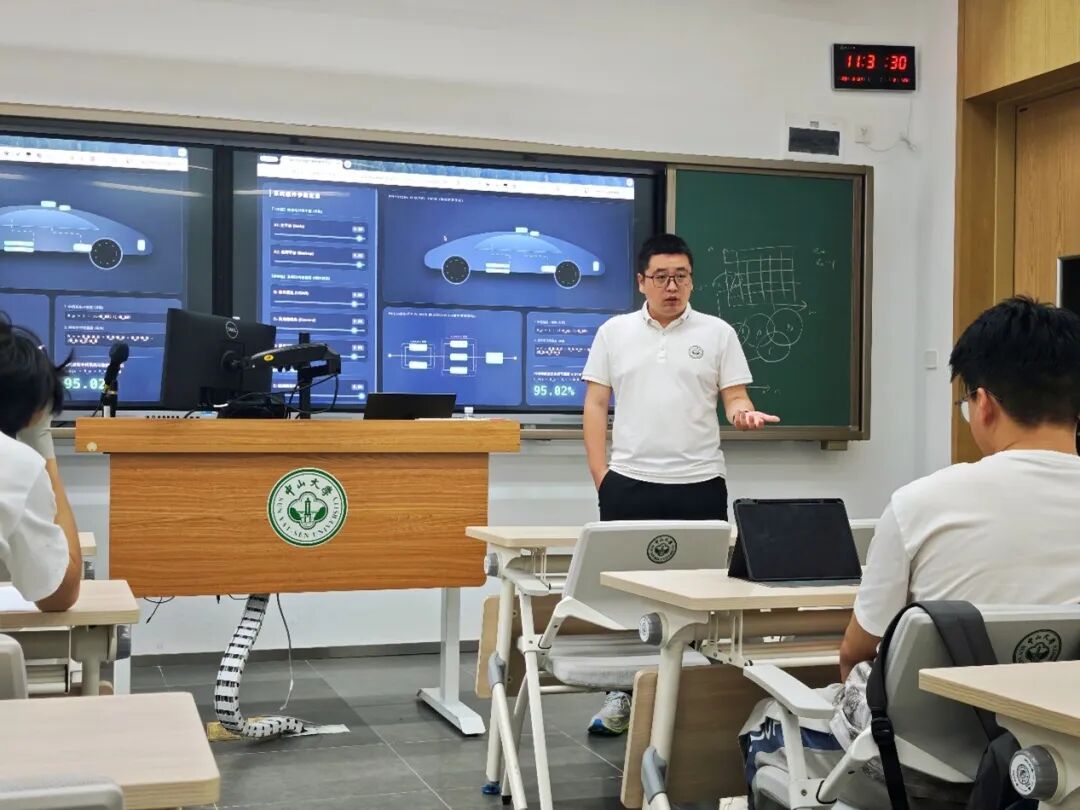
e-works Digital Enterprise Network recently conducted an in-depth interview with Prof. Jianshe Feng, director of the AI Cube Laboratory, exploring the deployment challenges and implementation pathways for predictive maintenance technology. Drawing on years of industrial experience, Prof. Feng offered a systematic industrial intelligence perspective, dissecting the key obstacles that stand between a pilot project and enterprise-wide rollout—and laying out concrete strategies to overcome them.
The full interview is reproduced below.
In recent years, predictive maintenance has attracted widespread market attention and was once heralded as the “killer application” of the Industrial Internet of Things, drawing numerous enterprises into the field. Yet its adoption has consistently fallen short of expectations, making it one of the technologies seen today as having the greatest demand and promise—and yet proving the most difficult to deploy at scale.
So why is predictive maintenance so hard to put into practice? What preparations should be made before implementation? And how can enterprises effectively advance its deployment? With these questions in mind, an e-works reporter interviewed Dr. Jianshe Feng, Associate Professor at the School of Advanced Manufacturing of Sun Yat-sen University.
Replication and Scale-up: The Biggest Challenge in PdM Deployment
Predictive maintenance (PdM) is an emerging maintenance strategy that has evolved alongside advances in industrial technology and maintenance philosophy, progressing from corrective maintenance through preventive maintenance to condition-based maintenance (CBM). Dr. Jianshe Feng noted that PdM relies on enterprises’ continuously improving ability to perceive equipment condition—collecting and analyzing equipment operational data to understand performance degradation trends and formulate highly tailored maintenance strategies. At its core, however, PdM remains a strategic design for maintenance activities: its essence is to optimize and enhance existing operations and maintenance (O&M) practices so as to minimize O&M costs.
Through years of equipment O&M practice, enterprises have accumulated a wealth of maintenance experience and knowledge. Nevertheless, moving beyond traditional O&M paradigms to build a predictive maintenance system that combines the hands-on expertise of field engineers with data-driven analytical insight remains a significant challenge.
“When advancing a predictive maintenance project, companies typically select one or two critical points for a pilot study—such as a key spindle, gearbox, or motor on a production line—before gradually expanding to a full line, multiple lines, or even the entire enterprise. In the pilot phase, companies can often achieve fairly impressive outcomes and value, such as effective identification of specific faults or remaining useful life prediction for a key component. The critical question, however, is: how do you replicate and scale that success?” said Dr. Feng. He noted that in the scale-up phase, enterprises frequently encounter multiple challenges that trap them in what he calls the “pilot trap”:
High degree of technical customization. PdM models are notoriously difficult to generalize; they must be trained and optimized for specific equipment and operating conditions. As a result, the successful approaches from a pilot project are rarely transferable directly to other scenarios or enterprises.
Difficulty quantifying business value. PdM technology requires substantial upfront investment, and the uncertainty around return on investment creates enormous decision-making challenges. Because implementation and scale-up require long-term iteration and improvement, significant economic benefits are hard to demonstrate in the short term. Under financial pressure, many enterprises adopt a wait-and-see attitude—or abandon PdM projects altogether.
Cultural and organizational change barriers. Advancing PdM requires enterprises to shift from traditional maintenance modes to data-driven decision mechanisms, demanding changes to internal business processes, organizational structures, employee skill sets, and cultural norms. These transformations often meet employee resistance and organizational inertia.
Breaking Free from the “Pilot Trap”: Integration with Enterprise Business Systems Is Key
To advance predictive maintenance, enterprises need a systematic implementation methodology. In Dr. Feng’s view, data-driven approaches inherently have limitations in generalizability and versatility; they must be combined with application context, domain physics, and engineering experience—and this fusion typically takes time and data accumulation. Moreover, PdM is fundamentally a value-driven strategy rather than a purely technology-driven one: it emphasizes maximizing business value through technical means. In the pilot phase, enterprises can focus on driving change through new technology to achieve targeted outcomes; but in the true scale-up phase, greater attention must be paid to how the technology positively affects the entire production process, product quality, and overall enterprise performance.
Based on this understanding, enterprises can follow the steps below to systematically build a predictive maintenance system:
Step 1: Establish clear objectives. Identify the main challenges currently faced in equipment maintenance management: Is production rhythm frequently disrupted by equipment failures? Is it difficult to ensure product quality consistency? Or are O&M costs simply too high? Focus on “improving quality, increasing efficiency, reducing costs, and cutting inventory,” and use these pain points to define project goals.
Step 2: Conduct a feasibility study and assessment before execution. Based on a comprehensive evaluation of the enterprise’s current manufacturing maturity level, develop a phased implementation plan, assess return on investment, and also consider existing staffing levels as well as the technology readiness level of predictive maintenance solutions for specific equipment types.
Step 3: Select implementation targets that are most critical and can deliver quick wins. First, define the monitoring level: component-level, equipment-level, line-level, or factory-level. For instance, if equipment utilization is low, a deeper analysis is needed to determine whether the root cause is frequent downtime due to specific component failures or a lack of effective production coordination between lines—in order to identify the true bottleneck. Second, prioritize implementation targets by balancing input and output benefits. Not all assets require fine-grained monitoring; focus only on equipment whose failure frequency is uncertain but whose failures, when they occur, result in prolonged downtime and significant economic loss. Third, select priority failure modes. Using methods such as FMECA (Failure Mode, Effects and Criticality Analysis), prioritize the failure modes that have the greatest impact on product performance, safety, or reliability.
In addition, enterprises must evaluate the technical feasibility of their chosen approach, including data collection considerations such as data accessibility, completeness, reliability, and quality; whether the collected data is sufficient to assess component degradation; and cost considerations for application development and deployment.
Dr. Feng emphasized that quick wins in the pilot project not only validate the feasibility of the technical methodology but also bolster the team’s confidence to continue executing the project. They also provide a rapid test of whether a specific scenario is viable for large-scale rollout.
The three steps above form the foundation for enterprises advancing predictive maintenance and are key to ensuring sound decision-making and successful project implementation.
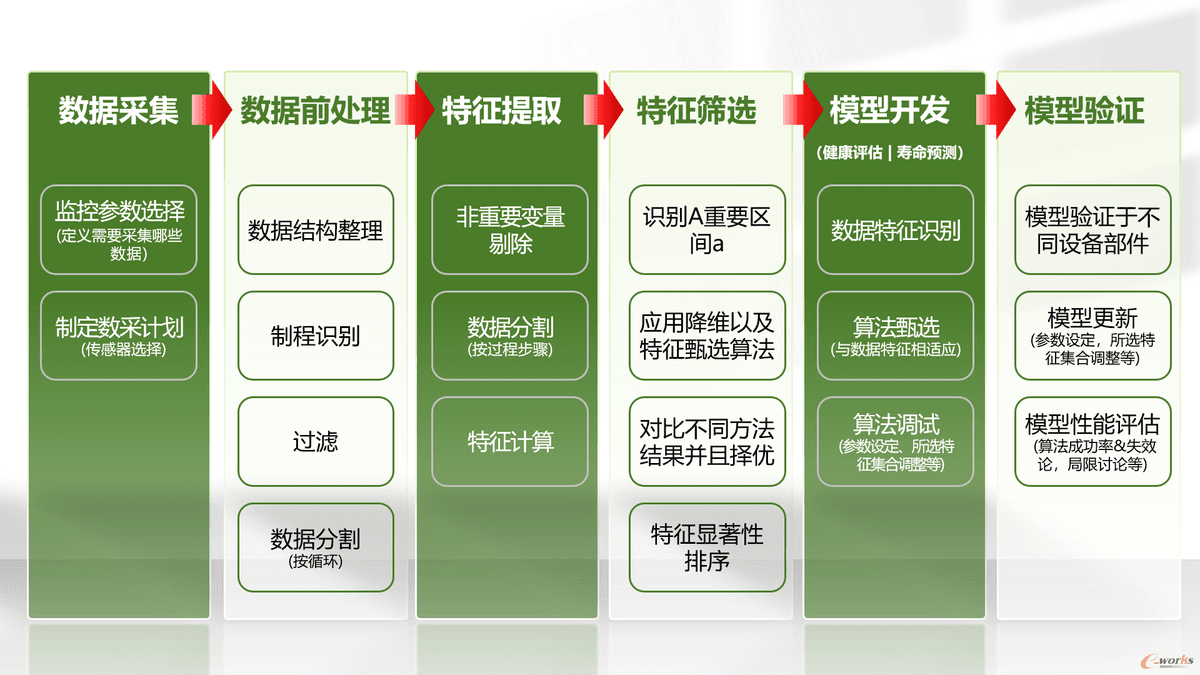
Step 4: Model development and deployment. This phase primarily involves data collection and preprocessing, feature extraction, feature selection, model development, model validation, and model deployment and go-live.
Depending on the application scenario, enterprises will build different types of models, including equipment condition monitoring models, equipment health assessment models, fault diagnosis models, and failure prediction models. The choice of modeling approach—physics-based methods, data-driven models, or hybrid models—depends on the scale of monitored equipment and data quality. With the development of pre-trained large models and other new technologies, the possibility of deploying generalized models that work across multiple scenarios is gradually becoming a reality.
Dr. Feng stressed that the keys to escaping the “pilot trap” are: (1) establishing a systematic industrial intelligence deployment methodology; and (2) effectively integrating PHM technology applications with existing enterprise process systems. At the technical level, it is essential to ensure that the systematic methodology is implemented reliably and consistently. At the planning level, enterprises should not blindly invest simply to introduce new technology; they must consider the long-term return on investment and practical application value. Application design should emphasize integration with the on-site O&M system, fully accounting for the operating habits and needs of field maintenance personnel, and providing a clean, intuitive user interface to ensure usability. Finally, new technology must be able to integrate smoothly with existing business systems such as ERP and MES, so that PHM system feedback can expand the industrial value of PHM technology at the business operations level.
Data Collection Volume: Determined by Problem Boundaries
The adequacy of data collection is critical to achieving predictive maintenance. How much data is appropriate? Is more always better? Dr. Feng believes that the appropriate volume of data collection is generally determined by the enterprise’s specific needs and target objectives. For example: How much room is there to improve current yield rates? Is the focus on a specific critical component, a piece of equipment, or an entire production line? Is the priority real-time anomaly monitoring during the production process, or fault mode identification at critical workstations? These considerations must be weighed alongside the cost and feasibility of data acquisition and the maturity of available technologies.
Data collection is a process of gradual accumulation. This is particularly true for newly constructed workshops: since equipment has just been put into operation, fault samples are relatively scarce, data diversity is difficult to guarantee, and the available data is often insufficient to support comprehensive modeling across the full range of PdM application scenarios—including anomaly detection, fault diagnosis, and failure prediction. In such cases, Dr. Feng recommends that these enterprises first collect data from equipment under healthy operating conditions and use semi-supervised or unsupervised models to identify anomalies inconsistent with baseline data or expected patterns, thereby initially achieving monitoring and early warning for production and equipment anomalies. Only after accumulating a reasonably complete dataset of typical equipment fault patterns should they attempt to build fault diagnosis and prediction models. He emphasized that building a PdM application is rarely a one-time investment that yields lasting success; it requires continuous data accumulation, knowledge refinement, and iterative model optimization.
Low Accuracy: A Misframed Question
Predictive maintenance has gone from being hailed with high hopes to being viewed with skepticism, and the prevailing perception is that most current PdM projects suffer from low prediction accuracy. But in Dr. Feng’s view, “low accuracy in PdM applications is a presupposed conclusion.” He noted that if one compares PdM applications to AOI visual inspection in electronics manufacturing workshops, the metrics for the latter are relatively simpler: detection applications have stable data sources, relatively clear objectives, and a fairly direct relationship between recognition accuracy and product pass rates. PdM applications, by contrast, have far more complex project goals—encompassing anomaly detection, fault diagnosis, product yield, production variation, and O&M decision-making—representing a much longer value chain. The output of predictive analytics is typically the starting point for the entire production maintenance activity and serves as a reference for formulating the global maintenance strategy. Only when tightly integrated with the overall O&M activity can it truly generate value.
From this perspective, using accuracy as the sole metric for evaluating the success or failure of a PdM project is inherently limited. Dr. Feng argues that, depending on the richness of accumulated data and domain knowledge and experience, the goal design for implementing predictive maintenance in a new scenario must progress through successively deeper stages: anomaly detection, fault pattern recognition, root cause tracing, and remaining useful life prediction. Throughout this process, metrics such as data observability, diagnosability and predictability, model robustness and interpretability, and the timeliness and actionability of application inference gradually improve. Continuously enhancing the model’s comprehensive performance through optimizing data quality, incorporating domain expert knowledge and experience, and performing online model updates and optimization represents a far more scientifically sound implementation path. In this sense, simply chasing algorithm or model accuracy is insufficient; greater attention must be paid to algorithm interpretability, model reliability and robustness, system execution efficiency, and generalization capability across multiple operating conditions—only then can the overall success of the project be guaranteed.
Furthermore, the sustained high-level performance of models under dynamic operating conditions is critically important. Most current PdM models rely primarily on historical data and are trained in offline environments. These models may perform well immediately after deployment, but over time, accuracy tends to decline gradually due to dynamic factors such as environmental changes, raw material variations, and equipment performance degradation. To address this, Dr. Feng recommends that enterprises adopt the following strategies: first, establish a scientifically rigorous evaluation mechanism to periodically monitor whether the distribution of production data has shifted significantly; on this basis, use newly collected data to perform timely online adaptive updates of model parameters through modern AI methods such as Bayesian optimization, transfer learning, and parameter fine-tuning; and finally, design corresponding evaluation metrics to verify the performance of the updated model, thereby ensuring sustained high-level performance under fluctuating operating conditions.
In closing, Dr. Feng noted that the industry already has a relatively rich ecosystem of AI tools and platforms available for use, including data collection systems, machine learning model development platforms, low-code digital twin frameworks, AIOps tools, and edge deployment kits. These have to some extent accelerated the development and deployment of industrial intelligence applications represented by PHM. However, he pointed out that the industry currently lacks universal tools capable of end-to-end, full-process problem resolution—which undoubtedly presents challenges for the scaled replication of industrial intelligence applications. On an encouraging note, with the emergence of pre-trained large models, retrieval-augmented generation, and related technologies, the construction of generalized models covering multiple scenarios is becoming increasingly feasible, lowering the barrier to knowledge transfer and accelerating the application and proliferation of predictive maintenance projects.
The difficulty of deploying predictive maintenance technology in practice stems not only from the inherent complexity and scenario diversity of the problem itself, but also from enterprises’ lack of a systematic industrial intelligence implementation methodology. “The core challenge in deploying predictive maintenance is not primarily at the technical level. The real difficulty lies in clearly defining expected goals, deeply integrating with the enterprise’s existing process systems, and driving innovation in organizational structure, execution strategy, and business management,” Dr. Feng concluded.
This article is reprinted from e-works Digital Enterprise Network. Original author: Huang Jufeng. Source: e-works Digital Enterprise Network