
· Academic Exchange · 13 min read
SYSU Faculty Voices | Jianshe Feng: Teach My Students to Fish — The Process Itself Is the Takeaway
The 'SYSU Faculty Voices' column features an exclusive interview with Prof. Jianshe Feng of SYSU Shenzhen Campus — tracing the journey of a scholar who walked back from the industrial front lines to the lecture hall, and how his philosophy of teaching his students to fish led a joint undergraduate-graduate-doctoral team to claim the global championship of the PHM Data Challenge, while cultivating next-generation engineering talent.
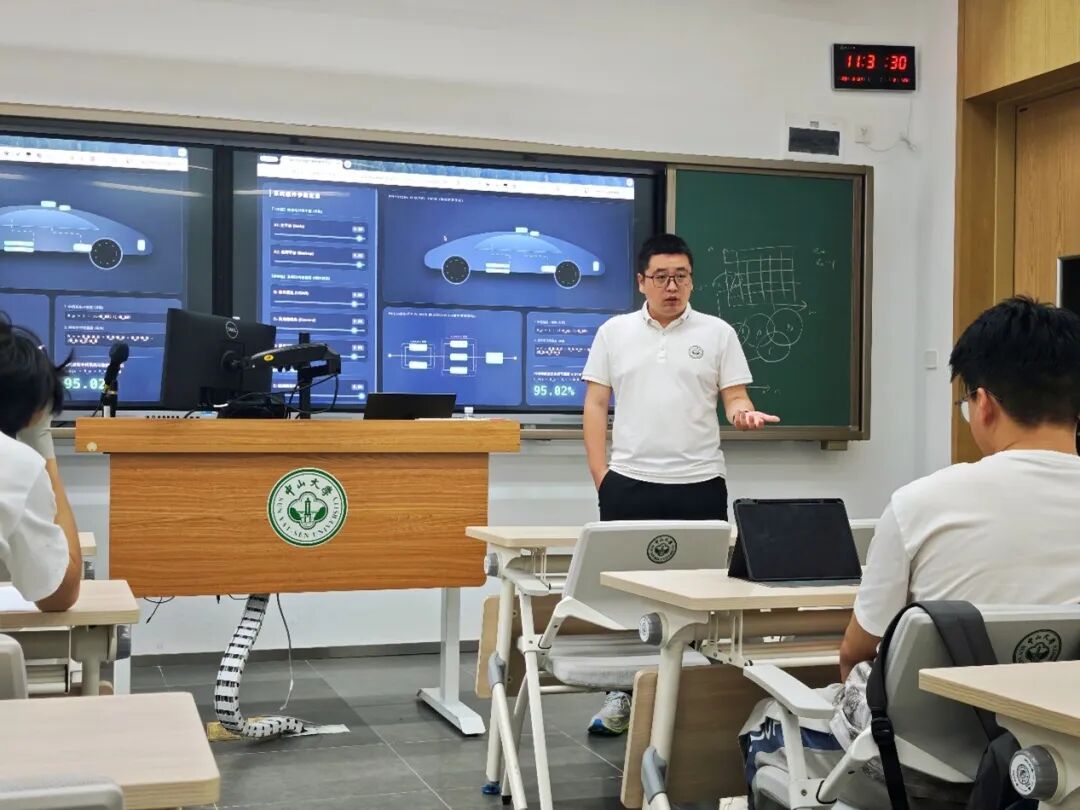
Recently, Prof. Jianshe Feng, director of the AI Cube Laboratory, sat down with the “SYSU Faculty Voices” column of Sun Yat-sen University’s Shenzhen Campus to share his journey from industry back to academia and his educational philosophy of teaching his students to fish. In the interview, Prof. Feng recounted how he guided a joint undergraduate-graduate-doctoral team to win the global championship of the PHM Data Challenge, how he brings real industrial data into the classroom to cultivate students’ engineering mindset, and his reflections on developing talent for the new era of engineering education.
The full interview follows:
Editor’s Note
Nestled between mountains and waters, Sun Yat-sen University’s Shenzhen Campus (SYSU Shenzhen Campus) is taking root in the vibrant Greater Bay Area with dynamic energy. It carries the mission of “building a world-class university rooted in Chinese soil,” bearing witness to the dual cultivation of scholars who teach, transmit knowledge, and illuminate minds — both in research and in education.
“SYSU Faculty Voices” captures what they study and what they think — recording their research breakthroughs in service of national needs, and presenting everyday moments of guiding students toward truth. Between the laboratory and the lectern, they are scientists and seekers who push boundaries, and educators and lamp-lighters who pass on the flame.
At the close of 2025, the world’s premier PHM Data Challenge concluded. The SAM-IPA-1 team — guided by Associate Professor Jianshe Feng of SYSU’s School of Advanced Manufacturing and composed of undergraduate, master’s, and doctoral students Peng Gao, Fanyu Qi, Yizhang Zhu, Jianyu Zhang, and Wenfei Li — emerged from a field of elite universities and industry powerhouses from around the globe to claim the global championship.
Behind this triumph lies not a mere accumulation of algorithms, but the victory of a distinctive philosophy of education. Prof. Jianshe Feng, a scholar who spent years on the industrial front lines at General Motors and Foxconn, is translating his profound understanding of “engineering” and “education” into a vivid practice of teaching his students to fish. In his research group, there is no spoon-feeding of standard answers — only the collision of ideas; not merely rigorous scientific training, but also the warmth of a mentor who is both teacher and friend. In his view, guiding students to find the direction of a problem, and accompanying them through the entire journey from “brute-force hyperparameter tuning” to “physical-principle awakening” — that process itself is the best answer.
From “the Industrial Floor” to “the Lecture Hall”
The research map of Jianshe Feng bears the unmistakable marks of cross-boundary experience: from the General Motors Research Center to Foxconn Industrial Internet, and then to SYSU’s School of Advanced Manufacturing. This cross-disciplinary journey has endowed him with a penetrating clarity that sees through surface appearances.
Coming from the front lines of R&D management in industry, what he carried back was not only a relentless pursuit of “root causes” and “process mechanisms,” but also a deep insight into “what constitutes a real problem.” He knew well that industry never prizes a polished final result — what it values is the reason and logic behind how that result was produced. Yet deep within, a longing to embed his personal research into the nation’s strategic needs, combined with a curiosity to explore the scientific essence underlying engineering problems, ultimately drew him back to the halls of academia.
In 2019, a chance to visit industrial sites across China firmly cemented the direction he would devote himself to.
He confided: “It was then that I truly grasped how vast the disparities in automation, digitization, and intelligence across industrial settings really are. Many sound technical methods and production philosophies have fertile ground here. We still need a sense of mission and ambition to serve the nation’s industry — to see this through.”
So he chose to come to Shenzhen, to this experimental field of new engineering education at Sun Yat-sen University. What he brought back was not just technical experience, but a unique culture of “problem-driven” inquiry. “SYSU students are outstanding — everyone has tremendous creative potential. As a teacher, what I keep thinking about is how to unlock that creativity.” This is the starting point of everything Jianshe Feng does in education.
Teaching Students to Fish: Forging Problem-Solving Ability Through the Process
In Prof. Jianshe Feng’s view, simply “giving them the fish” is no longer appropriate for the caliber of students at Sun Yat-sen University.
“The knowledge we teach may already be obsolete before students graduate. What matters more is equipping them with the ‘battle-hardened courage’ to face unknown engineering challenges without fear — the ability to break problems down and take responsibility for outcomes — along with a methodology for learning itself: for instance, how to convert abstract engineering knowledge into intuitive, sensory understanding.”
This is the core of his philosophy: teach students to fish, not give them the fish. “When I was a technical executive in industry, my core product was ‘manufactured goods.’ But when I returned to the university, my core product became ‘students.’ Teaching them to tune hyperparameters can get a team through one competition; teaching them to ‘seek the first principles of physics from complex data’ equips them for a lifetime.”
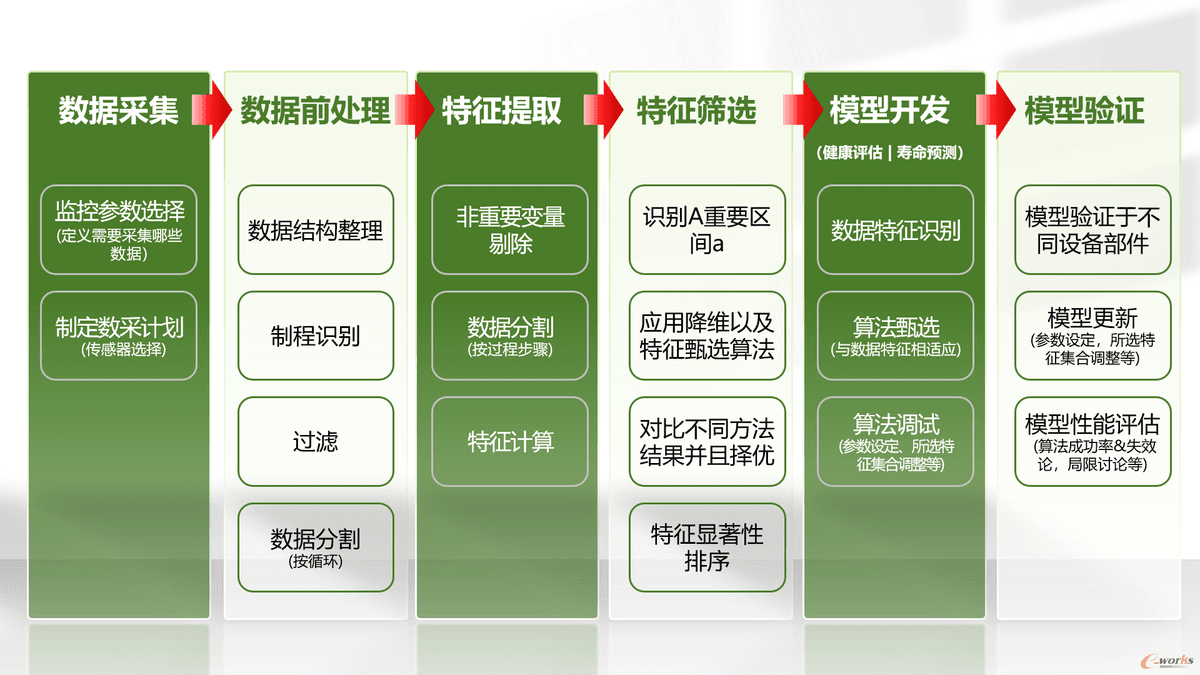
In the early stages of preparing for the PHM competition, the team fell into a mode of blindly trying black-box deep learning models — “brute-force alchemy,” with little to show for it. Prof. Feng intervened decisively, guiding students to step out of the trap of algorithmic fixation, return to the first principles of physics, and re-examine the physical meaning of sensors within the thermodynamic cycle.
Prof. Feng shared a vivid example: late one night, student Peng Gao excitedly presented a model with remarkably high accuracy. Rather than offering immediate praise, Prof. Feng pressed him: “If the sensor data drifts, is your model still robust? What is the physical logic behind that declining curve?” That same night, they identified that the results likely suffered from overfitting and insufficient interpretability.
“The result itself is not what matters — what matters is the logical closure of the reasoning. All field data is collected through sensors. Isn’t it possible that the sensor itself is faulty? That the data collected is simply wrong? How do you peel back the layers, strip out the noise and interference, and ultimately arrive at a result that is truly valuable — and that you can explain? That is the genuine engineering value of artificial intelligence in advanced manufacturing.”
This relentless pursuit of “process” and “mechanism” enabled the team, when confronted with complex aero-engine data during the competition, to look past surface phenomena and reach the essential truth — finding the optimal solution. What students gained was no longer merely a certificate, but a “thinking toolkit” transferable to any complex engineering problem.
Letting Every Strength Shine Within the Team
Prof. Feng’s research group is a true “mixed formation”: some students returned to school after working in industry, some came from different disciplines, and some were second-year undergraduates.
How does he enable students of such varied backgrounds to both divide responsibilities clearly and genuinely integrate?
His answer is “education without discrimination,” with a focus on shoring up weaknesses and leveraging strengths. “Students who have worked before have strong systematic thinking and methodical work habits; students who crossed disciplines may need to quickly build up their foundational knowledge in mechanical engineering. In the competition, the team divided into three lines: one person attacked deep learning relentlessly, one combed through literature to identify state indicators, and one returned to the raw data — ultimately synthesizing three core features grounded in thermodynamic empirical formulas.” Drawing on each person’s strengths, they became an organic whole.
Among them, the growth of second-year undergraduate Wenfei Li is the most vivid footnote to Prof. Feng’s educational philosophy.
“The greatest challenge for junior undergraduates participating in high-level research is breaking through the psychological barrier of self-doubt and building technical confidence.” Prof. Feng acutely recognized Li Wenfei’s strengths: exceptional hands-on ability, unrestrained innovative thinking, and outstanding English communication skills. The first time he asked Li Wenfei to try organizing the presentation materials, the student’s performance gave him a tremendous surprise. He then made up his mind to entrust the entire task of representing the team in Seattle to this second-year student.
When Li Wenfei stood before experts in Seattle, calmly fielding sharp technical questions, his composure was backed by hundreds of days and nights of solid work by the entire team.
Similarly, the transformation of graduate student Peng Gao left a deep impression on Prof. Feng. This student, who had switched disciplines, initially lacked confidence and was not good at communicating. Prof. Feng deliberately involved him in designing the laboratory’s 5S management system and encouraged him to use competitions as practice.
“A good advisor is not merely a Manager but also a Mentor. Young people today face many anxieties. The role of the advisor is to help them build a connection with the real world — to pay attention not only to anomalies in the data, but also to whether the light in a student’s eyes has dimmed.” Today, Peng Gao has grown into a core member of the team, completing a remarkable transformation from “follower” to “frontrunner.”
“The role of an advisor is more like the conductor of an orchestra. Every person has their own part; as the conductor, you don’t play for them directly, but you must grasp the overall rhythm and direction so that, together, they perform a beautiful composition.” This is how Prof. Feng describes the ideal relationship between teacher and student.
Connecting “the Classroom” to “the Field”: Cultivating Engineers Who Keep Both Feet on the Ground and Eyes on the Stars
Prof. Feng’s classroom never uses outdated case studies. He brings desensitized real accident data from industry into the classroom, asking students to play the role of “data detectives” to diagnose faults. This feeling of “working a real case” helps students deeply understand the engineering value of scientific research. His “spot-the-error” mechanism has also been widely welcomed by students: for every mistake found in the textbook or course notes, one point is added to the participation grade. “This not only sparks interest in learning but cultivates critical thinking — knowledge is not set in stone.”
His experience in industry has also profoundly shaped his teaching. He knows well that the precondition for “industry posing the questions and universities answering them” is defining the problem clearly.
“When a student excitedly says they’ve found a great result, I ask: Why does it work? Can it be scaled? How reliable is it? If this method works on one car, does it still work on ten thousand?” These questions, drawn from his industrial experience, teach students to shift from a “laboratory mindset” to an “engineering mindset.”
“Academia pursues ‘model elegance’; industry pursues ‘robustness and practicality.’ I require my students to get their feet muddy — to plant those sophisticated AI algorithms in the soil of the factory floor.”
He encourages students to venture out. Last summer, his students interned at Xiaomi Automotive; in their very first week, they dove into the field, solved a problem caused by a cognitive gap between industry and academia, and were awarded on the spot by the company. “That kind of positive feedback greatly strengthened students’ technical confidence.”
Speaking of the qualities of students in the School of Advanced Manufacturing, Prof. Feng summed them up in eight words: feet on the ground, eyes on the stars.
“Compared with students in traditional mechanical engineering programs, students in advanced manufacturing have something extra — a quality of gazing at the stars. On one hand, they are willing to roll up their sleeves and get things done; on the other, they are good at innovating.” This quality is precisely the ideal that new engineering education pursues.
Finally, he offered heartfelt words to the students of SYSU Shenzhen Campus: “If you feel lost or anxious about your future or your studies, please don’t be afraid. Feeling lost is simply a state that every university student inevitably passes through. What you need to do is step bravely out the door, try new things, discover yourself through trial and error — discover your interests, and discover your future.”
As Prof. Feng himself put it: “Shouldering your pack to walk through the tunnel, you will feel lost along the way, grow weary, and may even want to give up. But the moment you emerge on the other side, everything will have been worth it.”
On the innovative soil of SYSU Shenzhen Campus, Jianshe Feng is transforming the “fishing rod” he brought back from the industrial front lines into a “paddle” in his students’ hands — one with which they can navigate the uncertainties of the future. He accompanies class after class of students through the tunnel of knowledge, across the valleys of confusion, until they step into the open air and encounter their own moment of clarity.
For him, education has never been about lighting the path ahead for students. It is about walking side by side through the darkness, accumulating courage through every trial and error, and offering unwavering companionship in every moment of bewilderment. This is the most unpretentious — and most profound — conviction of a “lamp-lighter” of new engineering education.
About Jianshe Feng
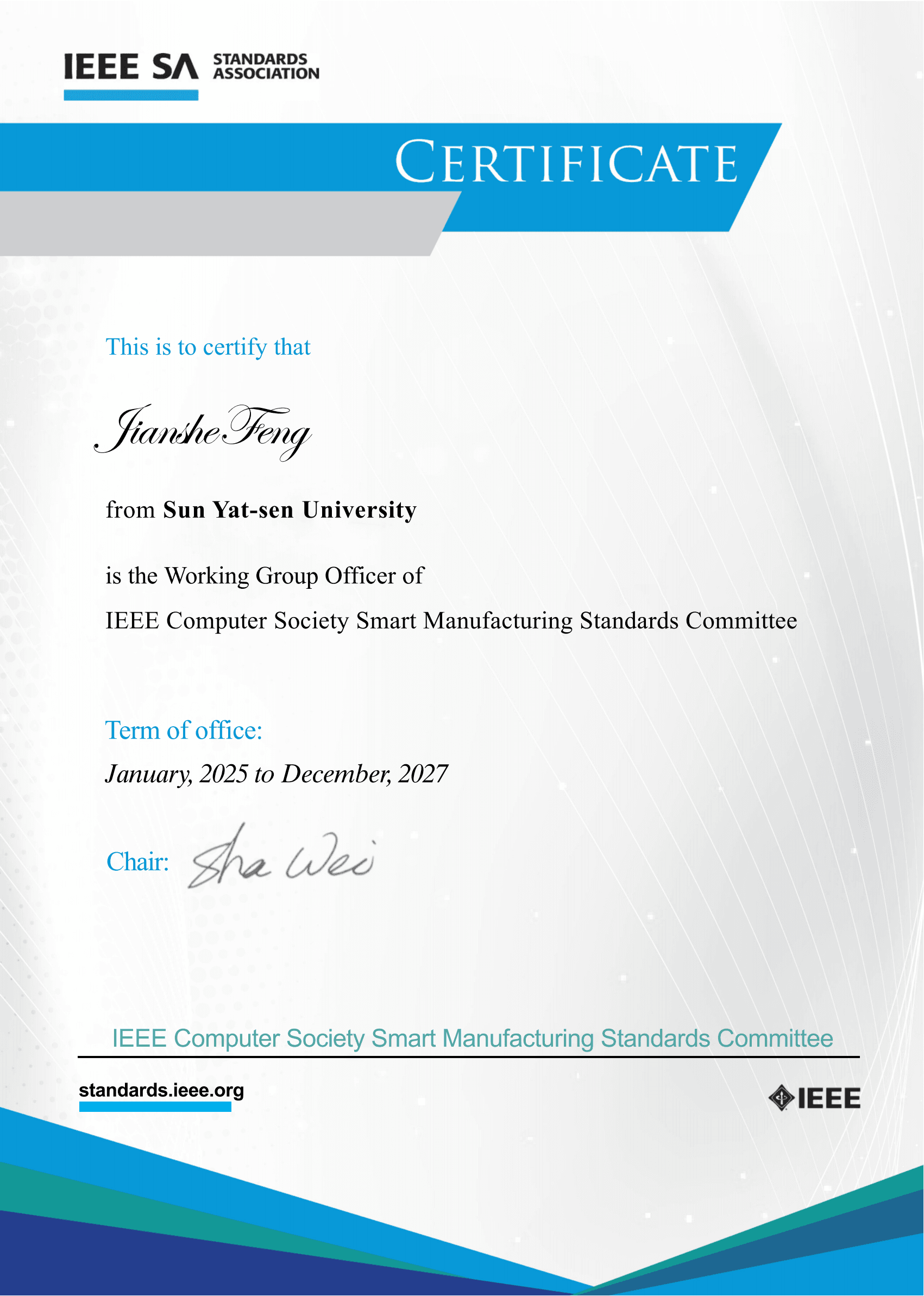
Associate Professor and doctoral supervisor at the School of Advanced Manufacturing, Sun Yat-sen University. Selected as a Shenzhen Overseas High-Level Talent (“Peacock Plan”). His primary research interests include industrial artificial intelligence, multimodal time-series modeling, and monitoring and optimization of advanced manufacturing processes. He has previously served as Chief Technology Officer of Xinrun Foxconn Digital Technology, Head of Industrial Intelligence Products at Industrial Foxconn, and Research Scientist at General Motors Research in the United States. In recent years, he has led multiple smart manufacturing projects at Xiaomi Automotive, CITIC Group, Foxconn Technology Group, General Motors, Applied Materials (USA), Eaton Electrical, and other companies, spanning the semiconductor manufacturing, new energy, and automotive industries, with sustained industry-academia-research collaboration and technology transfer. He has published more than 30 academic papers in the fields of industrial artificial intelligence, manufacturing process monitoring and optimization, and predictive maintenance, and holds more than 100 Chinese and international invention patents. He has received the CITIC Group “Special Prize for Science and Technology,” the “Industrial Application Innovation Award” from the National Engineering Research Center for Deep Learning Technology and Applications, and the PHM Society Annual Best Doctoral Dissertation Nomination, among other honors. In 2025, he guided a joint undergraduate-graduate-doctoral team from the School of Advanced Manufacturing to claim the global championship of the PHM Data Challenge.
This article is reprinted from the “SYSU Faculty Voices” column of the SYSU Shenzhen Campus Management Committee.
Acknowledgements: Prof. Jianshe Feng and team, School of Advanced Manufacturing, Sun Yat-sen University Coordination: Zicheng Li, Junyu Fan | Writing: Yuxuan Liu | Video: Junyu Fan | Layout: Yuxuan Liu First review: Xiaotong Ye | Initial review: Yingchen Guo | Review: Xiaoqiu Ding | Final approval: Zhongzhi Tai